Makers of the Modern Mind
PAGE COUNT: 450
RELEASE DATE: December 16, 2025
IMPRINT: Weidner Institute
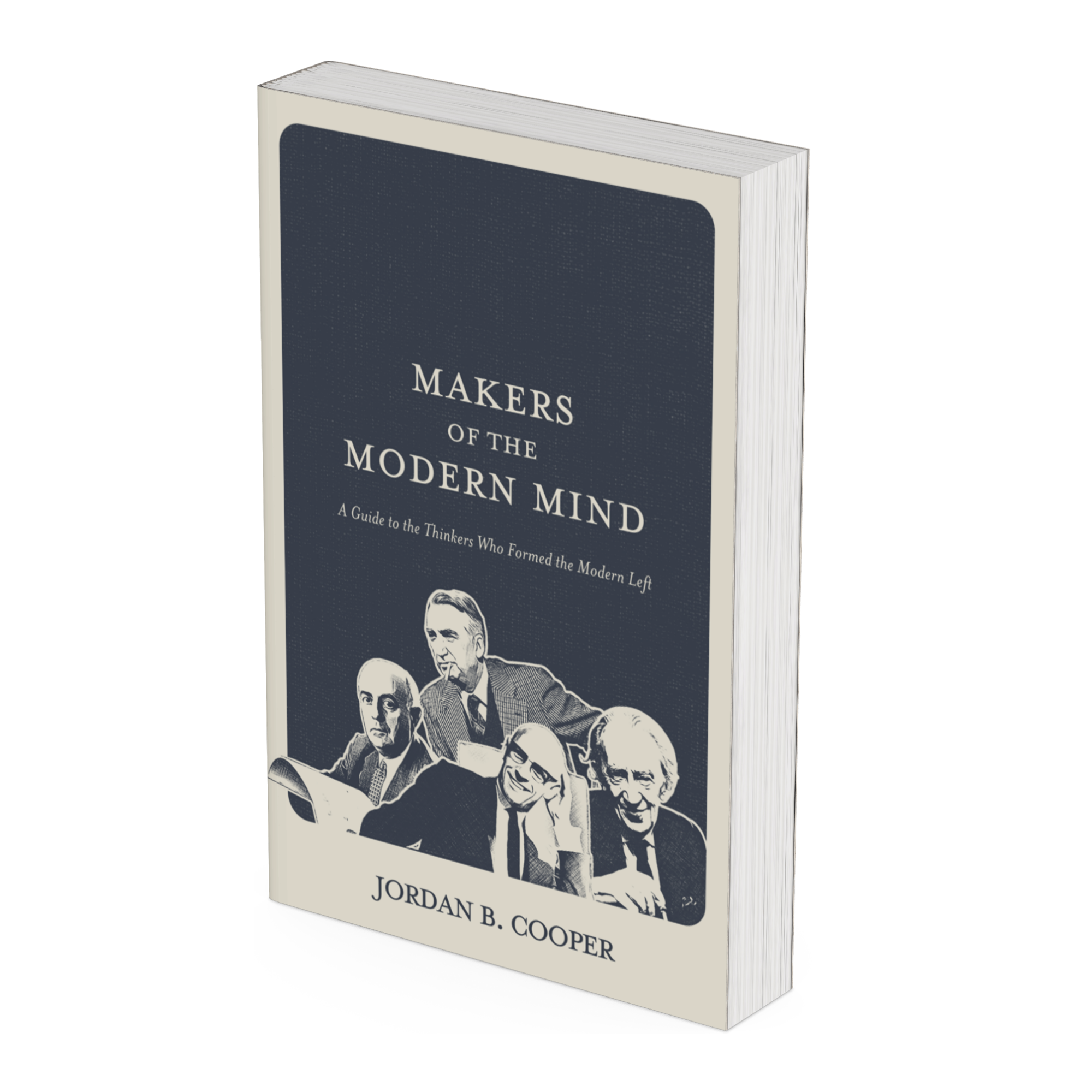
Modern Western thought has been shaped by a lineage of ideas extending from the Enlightenment to contemporary critical theory. In Makers of the Modern Mind, Jordan B. Cooper traces this intellectual genealogy through an accessible yet thorough overview of the figures whose work has defined the philosophical and cultural foundations of the modern Left.
Beginning with the central questions of modernity in Descartes, Hume, and Kant, moving through the birth of Liberalism in Hobbes and Locke, and tracing the rise of historicism in Hegel and its transformation into socialism by Marx and Engels, Cooper unfolds the intellectual story that culminates in twentieth-century and contemporary thinkers such as Foucault, Derrida, Butler, and Crenshaw. Each chapter distills complex arguments into accessible terms, showing how the modern Left’s understanding of reason, morality, human nature, and power developed over time.
Written from a conservative perspective but without strong polemic, Makers of the Modern Mind invites readers to understand before they critique, to see how ideas evolve, interconnect, and shape the culture we inhabit today. It is an essential guide for anyone seeking to understand the intellectual roots of the twenty-first-century Western academy.
“One temptation today is to mistake the superficial social media commentary, pro and con, on critical theory and various schools of Marxism and associated philosophies as grounded in proper understanding of the issues involved. They typically are not. Yet to understand these subjects typically requires wrestling with texts written in the most obscure prose that also assume considerable background knowledge of European philosophy, something few have the time or energy to do. That is why Cooper's book is so helpful: he has wrestled with those texts and their background and here explains both with clarity, connecting the necessary dots between thinkers, expounding their ideas with precision, and offering critique where appropriate.” - Carl R. Trueman, Grove City College, Ethics and Public Policy Center DC.
CONTENTS